It's a very simple piece of literature and makes you feel as if you have figured out exactly how the universe works.
A Brief History of Time — "Big Bang to Black Holes" — is one of the first non-academic books I owned, and it's so good that at least one chapter has to be read on any given day or it bothers me. This book pushed me to look deeper into physics, and afterward I started learning about more and more of it.
Understanding the way we think the world "really" operates is a humbling exercise. Whatever our knowledge or imagination holds could be wildly different from what actually is. This is not a book that will help you pass a physics exam.
It will, however, make you want to study physics — or at least leave you gloriously confused. The ideas are genuinely exciting, ranging from the Big Bang to black holes, to travelling through time and space. Hawking explains how time stops near black holes, why nothing can travel faster than the speed of light, how black holes aren't so black after all, and even the science-fiction ideas of wormholes and time travel.
The Arrow of Time
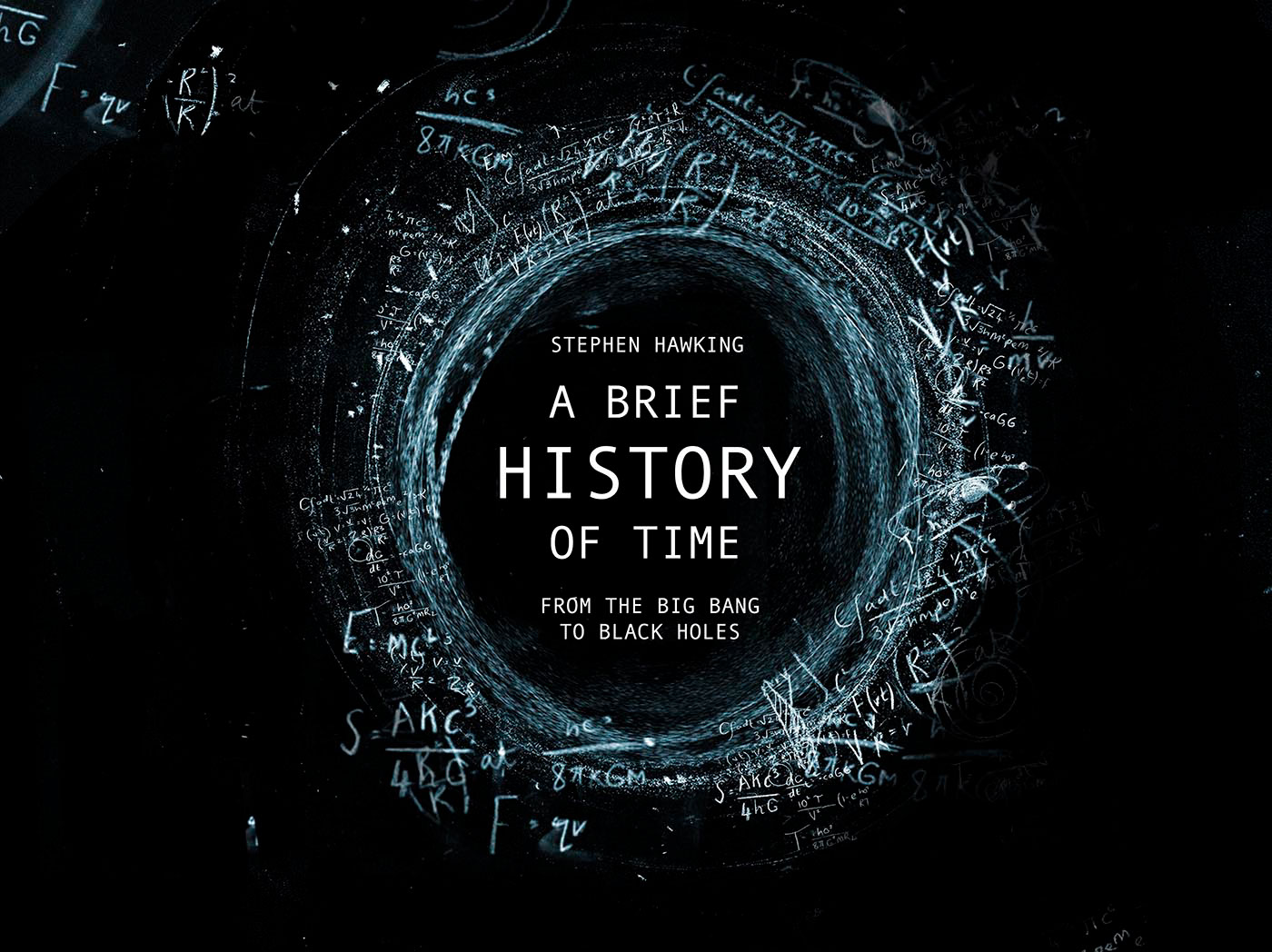
One of my favourite chapters is "The Arrow of Time" — where Hawking talks about the different directions in which time can be measured. One of them is the thermodynamic arrow of time, which explains time through entropy and how the two are deeply connected. Reading it felt like someone had finally handed me the right vocabulary for something I'd always sensed but couldn't articulate.
The book takes on the biggest questions humanity has ever asked — and it does so without a single complex equation. Everything is kept simple and clear. That doesn't mean every point will make sense to every reader, because the concepts are genuinely mind-bending. But that's precisely what makes you think and question and stay up later than you intended.
Even if not fully understood, it will fill you with curiosity. It generates a childlike wonder toward the grandness of the universe — a feeling that is, frankly, rare and worth protecting.
I would recommend this book to everyone. No prerequisite knowledge of physics is required. It's a very simple piece of literature and makes you feel as if you have figured out exactly how the universe works — and then reminds you, gently, that you haven't.